







If your bedding leaves you too hot, too cold, or constantly kicking off the covers at 2 a.m., the problem usually isn’t your bed — it’s the comforter. The right down comforter doesn’t just look plush in photos; it quietly regulates your sleep environment so you stop waking up mid-negotiation with a blanket.
The tricky part isn’t deciding whether down sounds appealing. It’s figuring out which down comforter actually fits your sleep style, your room, and the season. Lightweight or all-season? Goose down or a feather blend? Cotton, silk, or linen shell? These details matter more than most bedding guides let on.
Why a Good Down Comforter Changes How You Sleep
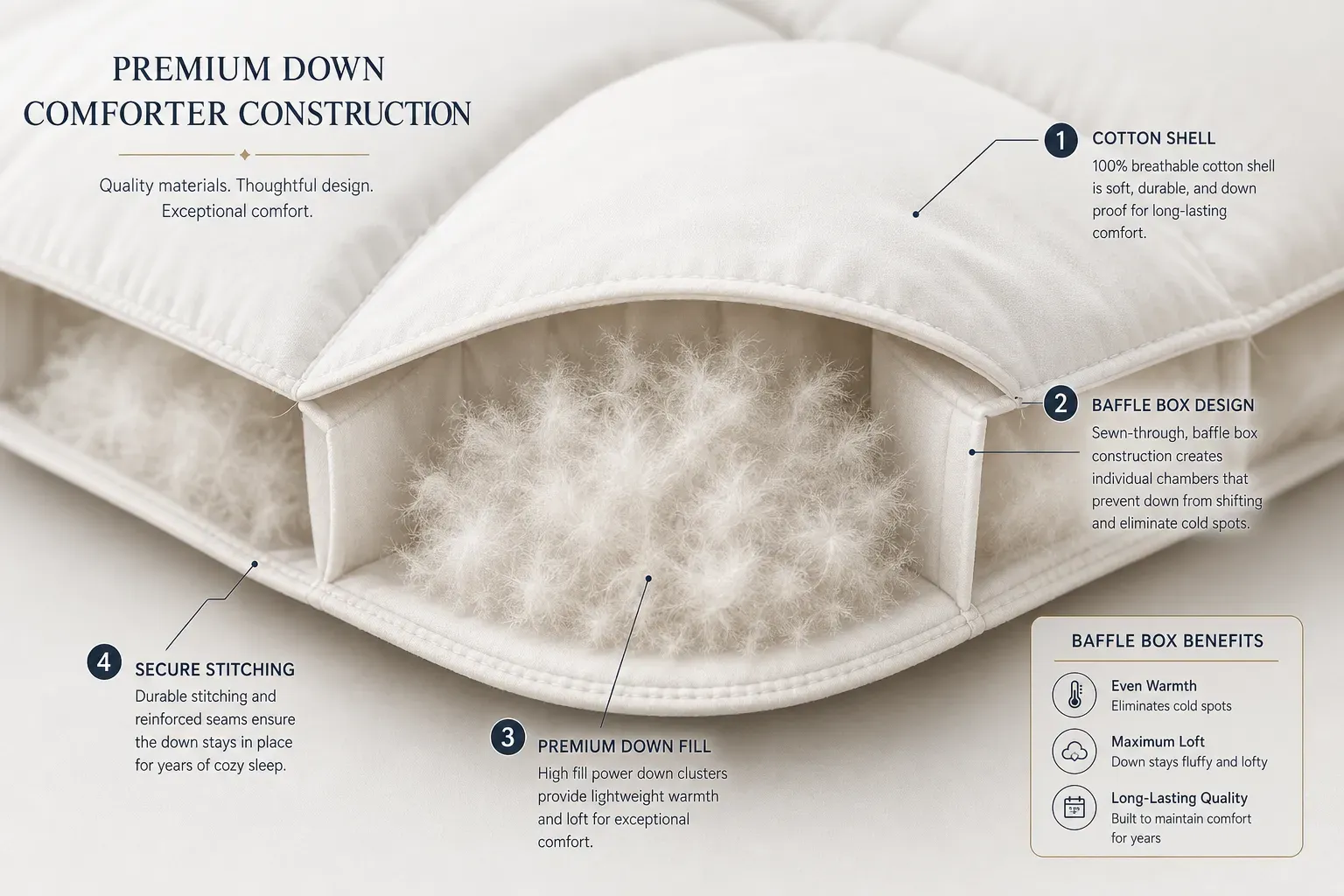
High-quality down clusters create loft and insulation while still letting air move through, which is the difference between “warm” and “warm but stifling.” A well-made down comforter tends to feel light rather than heavy, cozy without trapping heat, and forgiving enough to layer up or down as the seasons shift. Cheaper alternatives often flatten fast, shift their fill to one corner, or feel synthetic no matter how good they look online — which is exactly why construction and materials deserve more attention than most shoppers give them.
Fill Power vs. Fill Weight — They’re Not the Same Thing
Fill power measures how lofty the down is; fill weight measures how much down is actually inside. A higher fill power generally means better insulation without extra bulk, which is why two comforters can look similar on a shelf and feel completely different in bed. Construction matters just as much — baffle-box stitching keeps down evenly distributed instead of clumping, and strong edge finishing keeps that loft consistent wash after wash.
Shell Fabric Changes the Feel as Much as the Fill
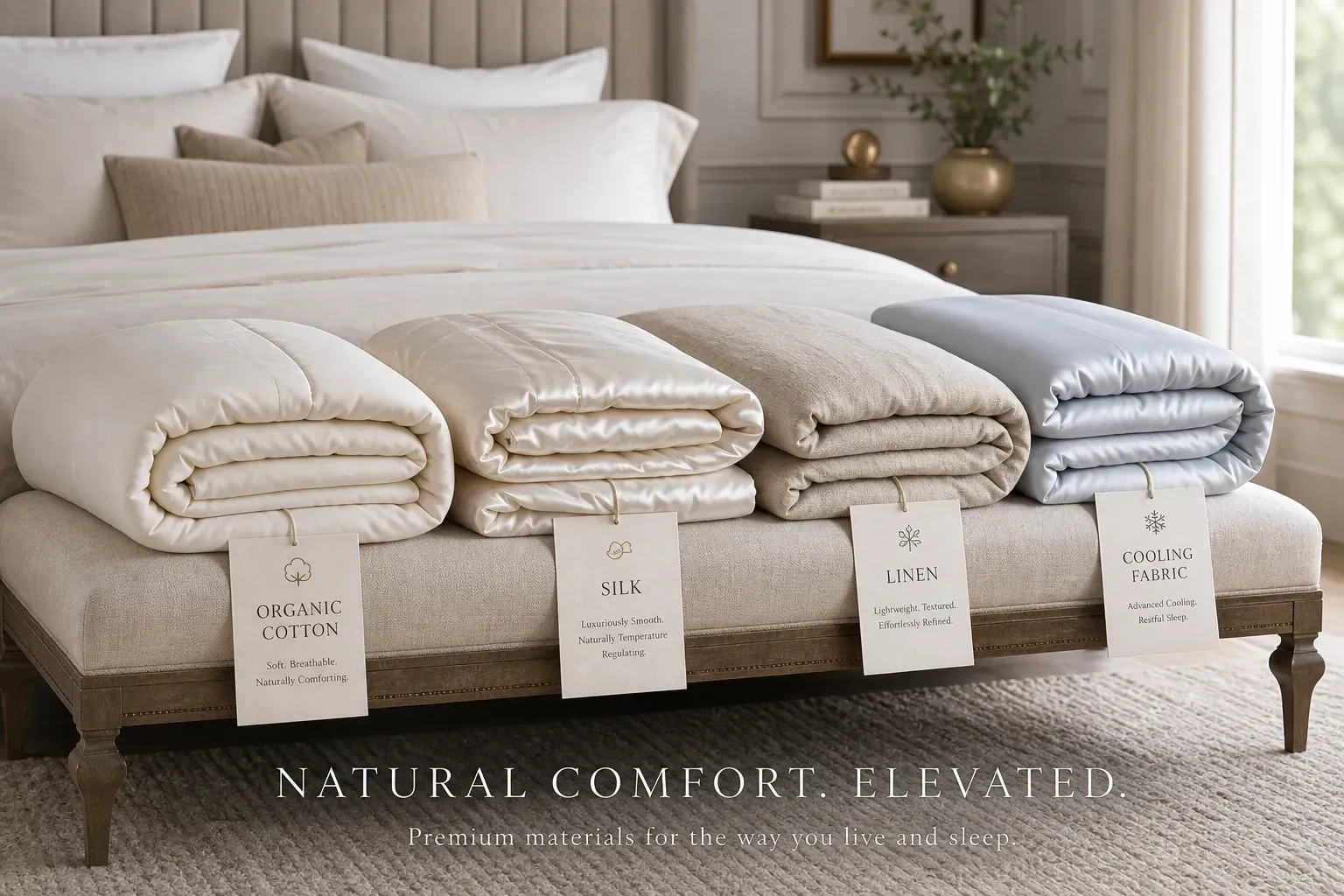
This is one of the most overlooked details in comforter shopping. The shell isn’t just packaging for the down — it decides whether the comforter feels crisp, silky, relaxed, or cool to the touch.
Organic cotton is the classic choice: breathable, easy to live with, and versatile enough for couples or year-round use. Silk shells sit at the other end of the spectrum — smoother, more refined, and naturally temperature-balancing, which is why something like the Deluxe Silk Goose Down Comforter tends to appeal to shoppers who want an elevated, almost hotel-like feel rather than a purely practical upgrade.
Linen occupies its own lane entirely. It has a relaxed, slightly textured quality that pairs well with warm fill because it prevents that overly sealed-in feeling winter bedding can create — a comforter like the European Linen Goose Down Filled Comforter is a good example of how a shell fabric can soften a heavier warmth level rather than fighting against it.
Goose Down vs. Feather Down
Goose down is prized for larger clusters, better loft, and lighter warmth — it typically feels more premium and insulates without added heaviness. Feather-heavy blends cost less but tend to feel denser and less airy, and depending on construction quality, occasionally a bit poky. If the goal is a genuinely cloudlike comforter, goose down wins. If the goal is basic warmth on a budget, feather blends can work, but they rarely deliver the same elevated feel.
Matching a Comforter to How You Actually Sleep
Hot sleepers generally do best with lightweight fill, a breathable or cooling-leaning shell, and lower overall loft — heavy winter-weight fills and dense synthetic covers tend to work against them. Cold sleepers want the opposite: higher loft, all-season or extra-warm fill, and a tightly woven shell that holds heat close.
Couples are the trickiest case, since two people rarely run the same temperature. A balanced all-season warmth level, breathable materials, and slightly oversized dimensions help prevent the nightly tug-of-war. For shoppers who want a dependable, do-it-all option without overthinking warmth levels, a versatile pick like the Cozy365 Premium Down Comforter covers that middle ground reasonably well — good loft, breathable cotton shell, and enough flexibility for most bedrooms that aren’t extremely hot or extremely cold.
Standalone Comforter or Duvet Insert?
Both work, and the right call depends on lifestyle more than comfort. A standalone comforter is simpler to style and skips the extra layer of fuss. A duvet insert paired with a cover is easier to wash, easier to refresh seasonally, and better protected long-term — for many households, that combination ends up being the more practical, longer-lasting choice.
Is a Pricier Down Comforter Actually Worth It?
Usually, yes, if the quality is real. A better comforter typically means higher-grade fill, tighter stitching, more durable loft, and a shell that breathes properly instead of trapping moisture. Cheap comforters lose loft quickly and develop cold spots; well-constructed ones hold their shape for years with basic care — gentle washing, regular fluffing, and storage in a breathable bag rather than compressed plastic.
The Bottom Line
There isn’t one “best” down comforter — there’s the one that matches your room temperature, your sleep habits, and how much you value the tactile experience of the shell fabric. Hot sleepers should prioritize breathability over warmth level; cold sleepers should prioritize loft and fill power; couples should look for balance over extremes. Once you know which of those categories you actually fall into, narrowing down fill type, warmth level, and shell material becomes a much shorter — and much more comfortable — decision.