








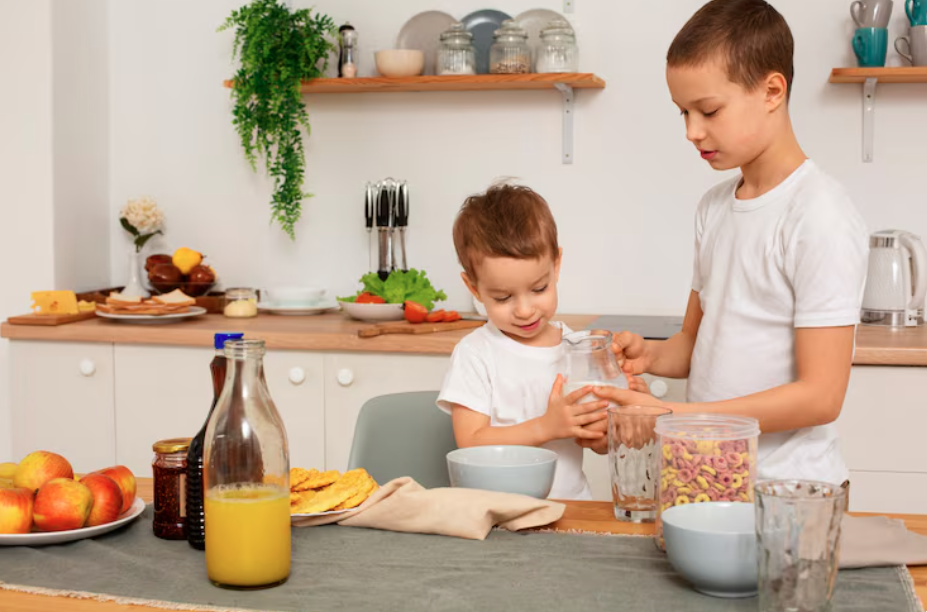
Food storage isn’t the most glamorous life skill, but it’s the sort of thing children quietly benefit from for years. Knowing where food belongs, what needs using first and why leftovers shouldn’t be forgotten helps them understand money, waste and safety without a big lecture.
These are small habits, but they make a kitchen easier to share and help children see food as something to look after, not just something that appears in cupboards.
1. Knowing what goes in the fridge
Children can learn that some foods need to stay cold to remain safe. Milk, cooked meat, yoghurt, leftovers and many opened jars belong in the fridge, while tins, pasta and rice can usually live in a cupboard.
A simple fridge shelf rule can help: colder foods go back quickly, leftovers need covering, and anything unsure gets checked with an adult.
Food safety at home becomes easier when children understand the reason behind the rule, not just the rule itself.
2. Using the oldest food first
The “first in, first out” idea is simple enough for children. If there are two yoghurts, use the one with the earlier date. If a packet is already open, finish it before opening another.
Keeping the idea practical matters. It should feel like helping the household, not being blamed for waste.
This can become a quick job before shopping day. Ask children to spot what needs using and help plan a meal around it.
3. Storing leftovers properly
Leftovers can feel like boring grown-up territory, but children can help label tubs, let food cool safely and decide what could become tomorrow’s lunch.
For adults wondering how to start fostering, everyday skills like this show how much care lives in ordinary routines. Fridge shelves, labelled leftovers and safe storage are small things, but they help children see that home is organised around their needs too.
Try not to turn this into a test. The aim is confidence and consistency, not a perfect result on the first attempt.
Cutting household food waste starts with making leftovers visible. A clear tub at eye level is more likely to be eaten than a mystery container at the back of the fridge.
Make labels easy to understand
Labels don’t need to be fancy. A bit of tape with the food name and date is enough. Younger children can draw a symbol, while older children can write the date themselves.
This teaches them that food is easier to use when everyone knows what it is and when it was stored.
4. Keeping dry food sealed
Cereal, pasta, flour, crackers and rice last better when they’re sealed properly. Children can learn to fold packets, use clips or move food into containers.
Let children choose the system where you can. Clips, clear tubs or labelled jars are easier to use when everyone understands where things go.
This is also a good moment to talk about pests, freshness and why cupboards need occasional checking.
5. Understanding dates without panic
Children often hear adults talk about dates on food without knowing what they mean. Explain the difference between foods that need extra care and foods that may still be usable after a best-before date if they look, smell and taste fine.
A calm explanation helps children avoid both extremes: throwing safe food away too early or ignoring dates that really matter.
Food storage is a small skill, but it gives children confidence. They learn to notice, plan and take responsibility for everyday resources, which is exactly the kind of hands-on learning that helps a household feel more capable.