


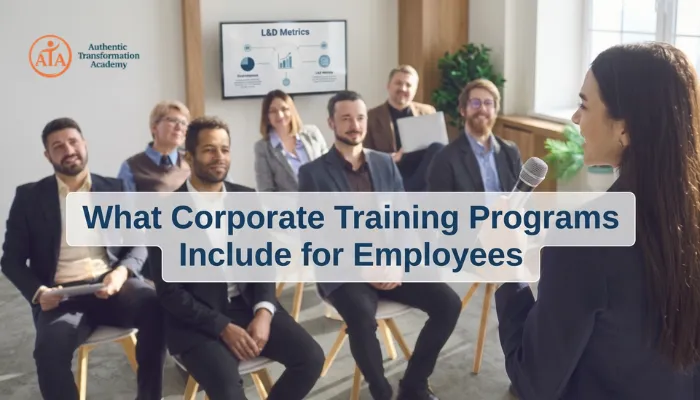
Corporate training programs typically include leadership development, communication coaching, customer service skills, compliance modules, and digital tools training. The exact mix changes depending on your industry and team size, but most companies build around those core areas.
At www.theatacademy.com, we’ve designed employee training for Singapore companies across different sectors. That experience has shown us what programs actually deliver results and what just look good on paper.
And in this guide, you’ll get a clear breakdown of what training programs cover and how continuous learning ties into professional development. You’ll also see why the right setup can lift job satisfaction and keep your best people around.
Everything here is practical, specific, and based on what employees actually need to grow. So, let’s get started!
What Employee Training Programs Typically Cover
As we’ve briefly discussed, most corporate training programs focus on three areas: leadership, customer service, and industry-specific skills. Each one targets a different part of how your employees perform, communicate, and grow.

Here’s what each area brings to the table.
Leadership Development and Management Skills
Leadership development programs prepare managers to lead with clarity, instead of guesswork. These sessions cover the specific skills your team leads need to handle real workplace challenges every day.
- Decision-making: Managers learn how to weigh options quickly and make informed decisions under pressure, which builds trust across their teams.
- Delegation: Staff training in delegation helps leaders assign work based on strengths, so projects move forward without bottlenecks.
- Mentoring: Companies in Singapore often pair new managers with senior mentors who coach them through their first year of leadership.
Strong leadership development gives your workforce a support system that keeps growing from the inside.
Customer Service Training
Customer service training teaches employees how to handle complaints, read body language, and keep clients coming back. And honestly, this is where most teams see the fastest improvement.
- Role-playing: Employees practise real conversations with difficult customers, which builds confidence before they face those situations on the job.
- Active Listening: Training courses in active listening help staff pick up on what a customer actually needs, not just what they say out loud.
- Tone and Delivery: Sessions cover voice modulation and speech delivery techniques so your team sounds confident and professional on every call.
When your employees know how to handle tough conversations, your business keeps its reputation intact.
Industry Specific Training
Not every role needs the same development. Industry-specific training focuses on the skills and knowledge your sector demands (and yes, generic training rarely sticks with specialised teams).
- Compliance: Industries like construction and manufacturing need accredited workplace safety training to meet safety training regulations and protect their workforce.
- Customised Content: Healthcare, finance, and tech industries each require specific training that reflects how their teams actually operate day to day.
- Local Standards: Trainers adjust training materials based on Singapore’s WSQ training framework and current industry trends, so your programs stay relevant.
The more specific your training is to your industry, the faster your employees can apply what they learn.
How Continuous Learning Supports Professional Development
Continuous learning builds professional development into everyday work. And with nearly 40% of job skills expected to change by 2030, this continuous improvement gives your workforce a real competitive edge.

Two key areas drive this forward, including:
Soft Skills and Communication Coaching
We’ve run enough coaching sessions to know that confidence doesn’t come from slides. It comes from practice.
- Interpersonal Rapport: Employees develop stronger workplace relationships when they learn how to read a room and respond with clarity.
- Voice and Delivery: Communication coaching covers voice modulation, speech delivery techniques, and presenting ideas so they actually land with an audience.
- Mindset Resilience: These sessions help staff build the kind of confidence that lets them speak up in meetings without second-guessing themselves.
Soft skills training gives your employees tools they use in every conversation, every day.
Digital Training and Data Analytics Skills
Frankly, most teams are already behind on this. Digital training keeps employees current with the tools their roles actually require, and that gap only widens without regular learning.
- Platforms and Systems: Staff learn programs like Excel dashboards, CRM systems, and basic data analytics so they can support business decisions with real numbers.
- Staying Current: With digital tools changing fast, short courses help your workforce close knowledge gaps before they affect performance.
- Tracking Progress: Companies measure employee development through completion rates, quizzes, and benchmarks that show specific skills improving over time.
If your team stops learning, your business will fall behind the industries that don’t.
The Impact of Employee Development on Job Satisfaction
Believe it or not, employees don’t stick around because of the training alone. What actually drives retention is the feeling of going somewhere in their career.
According to LinkedIn’s 2024 Workplace Learning Report, companies with a strong learning culture see up to 57% higher retention, and that connection between employee development and higher job satisfaction shows up across industries.
But it’s not only the courses and workshops that drive this. Positive feedback also play a big role in keeping the momentum going. We’ve seen managers who run regular check-ins and peer reviews create a motivated workforce with a clear path to career progression. Without that structure, professional growth will likely stall and people will start looking for other opportunities.
How Companies Use Digital Tools for Corporate Training
How do you train a workforce spread across three different offices without pulling everyone into one room? For most companies in Singapore, digital tools have become the answer.
The table below compares three common training formats and what each one offers your business.
| Format | Best For | Flexibility | Cost |
| In-person workshops | Hands-on skills, team culture building | Low, needs scheduling | Higher per session |
| Digital courses | Self-paced learning, short courses | High, anytime access | Lower per employee |
| Blended programs | Full staff training across locations | Medium to high | Balanced, scalable |
But here’s what most companies get wrong: They pick one format and stick with it for every program. A blended approach works better because it gives employees the flexibility to develop at their own pace while still creating space for live coaching and mentoring sessions.
Learning management systems support this by tracking attendance, completion rates, and job performance over time (that’s a cost many SMEs underestimate when they skip the tracking side).
So, if your business currently runs training without measuring results, you’ll soon lose sight of where your workforce actually stands.
Why Employee Training Programs Are Worth the Investment
A well-structured employee training program pays for itself through stronger teams and lower turnover. When your business commits to learning, mentoring, and ongoing courses, employees notice. They build new skills, take on bigger roles, and bring more energy to the work they do every day.
Plus, the companies that get this right don’t treat training programs as a one-off expense. They see them as long-term support for their people and their business growth. And that mindset is what separates a good workforce from a great one.
If you’re looking for programs that cover communication coaching, leadership development, and mentoring, The Authentic Transformation Academy can help. Explore what’s available and find the right training for your team.